Case study
Boathouse Residences
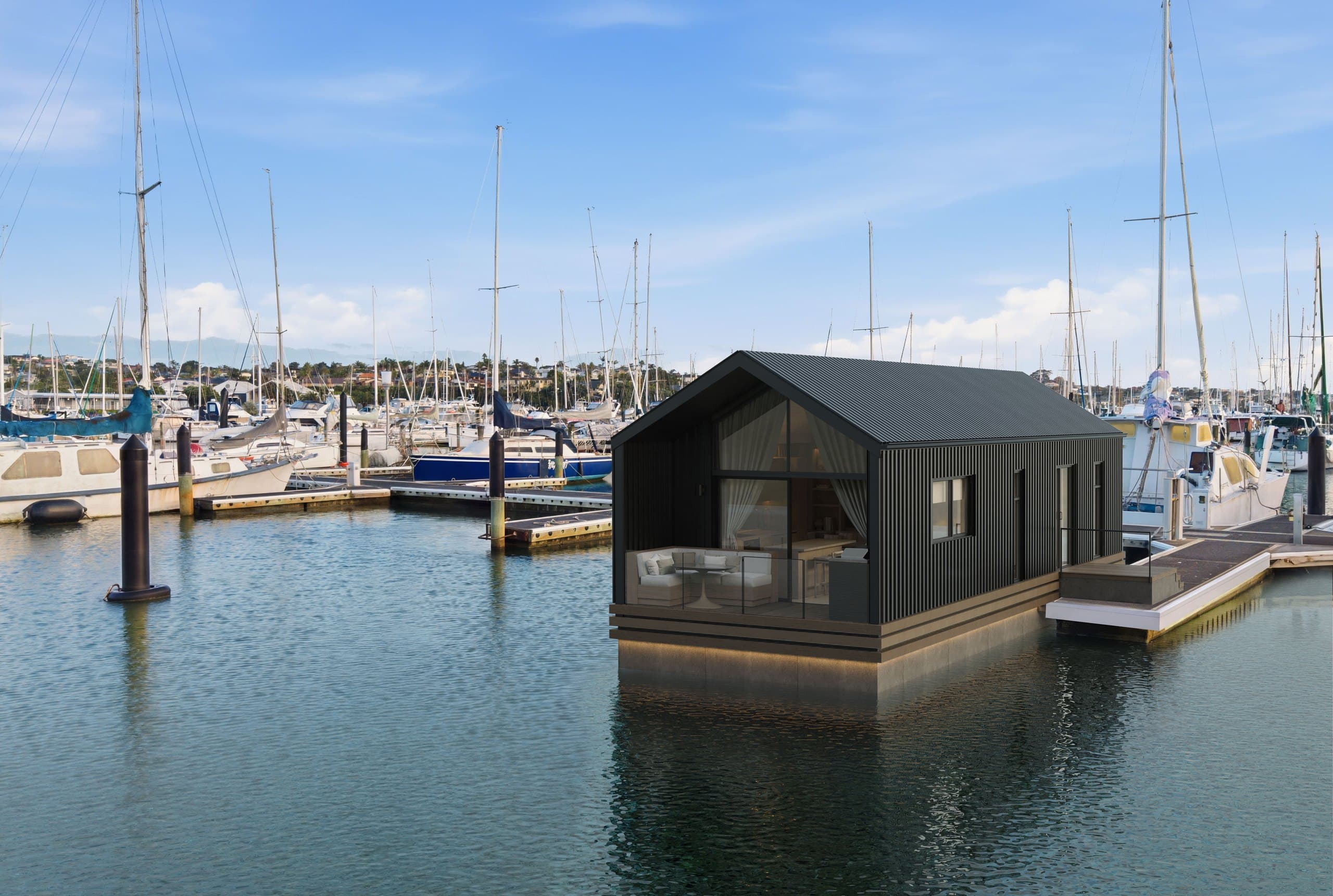
Render Works produced twenty-two photorealistic renders and a cinematic studio film for Empire Capital's Boathouse Residences at Hobsonville Marina in Auckland. The visual set explains two home types—a studio and a two-bedroom residence—through marina context, exterior day and evening views, detailed interiors and deck-level perspectives.
What did Render Works deliver for Boathouse Residences?
The project required enough imagery to show the waterfront setting, distinguish the two residence types and communicate how each compact interior connects to its deck and the marina.
| Deliverable | What it covered |
|---|---|
| Marina and exterior renders (8) | Aerial and water-level context, studio and two-bedroom exteriors, plus day and evening views. |
| Studio renders (6) | Living, kitchen, bedroom, bathroom, open-plan interior and deck. |
| Two-bedroom renders (8) | Living, lounge, kitchen, main and guest bedrooms, bathroom, study and deck. |
| Cinematic film | A long-form showcase following the studio residence from its exterior setting through the interior and deck. |
The stills were created through our 3D architectural render service, with the motion sequence produced through our cinematic walkthrough video service. See more regional work on our Auckland architectural rendering page.
What are the Boathouse Residences?
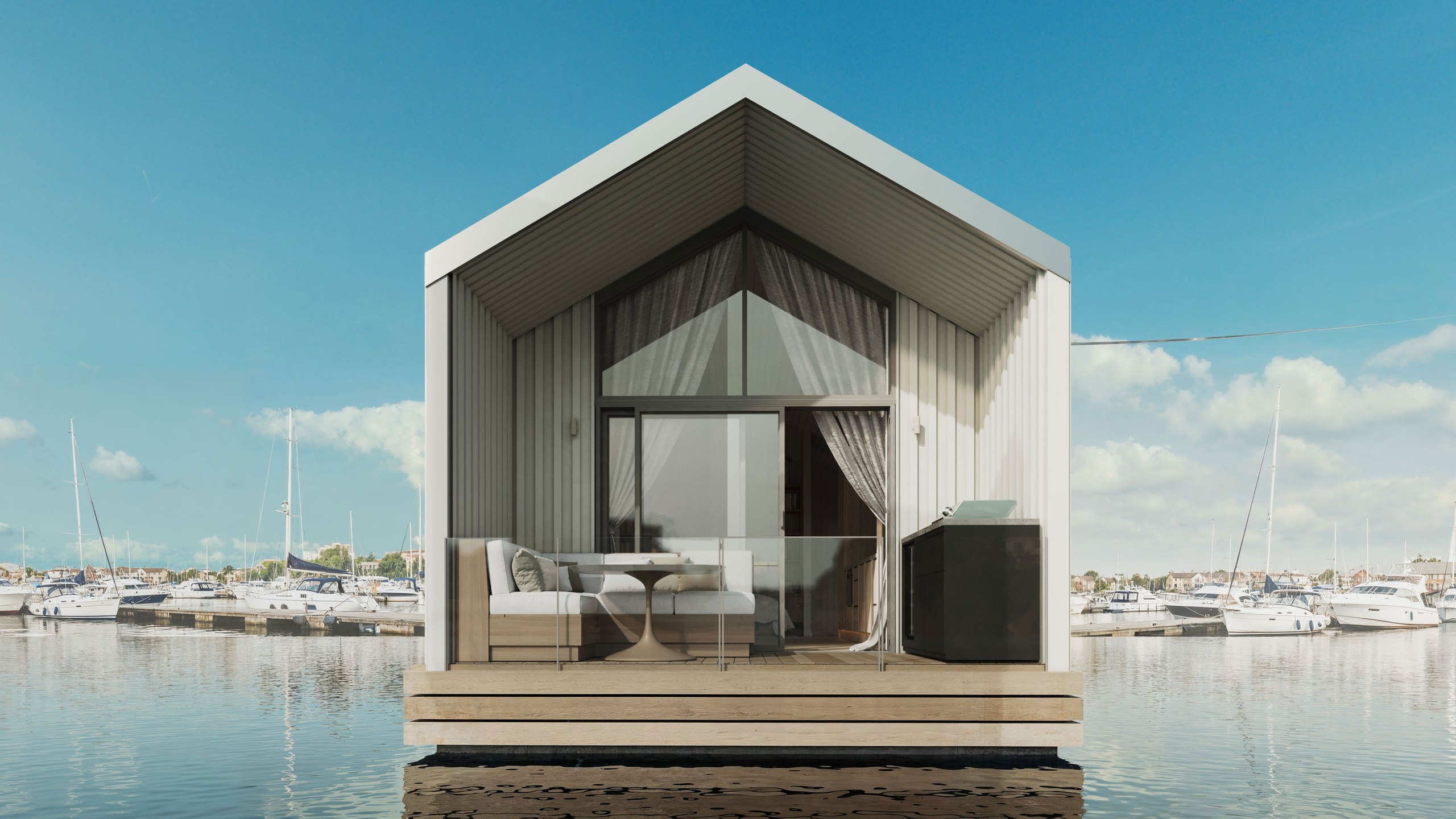
Boathouse Residences are floating homes designed for Hobsonville Marina. The project includes studio and two-bedroom layouts, each expressed as a compact dark-clad volume with a pitched roof, full-height glazing and a timber deck facing the water.
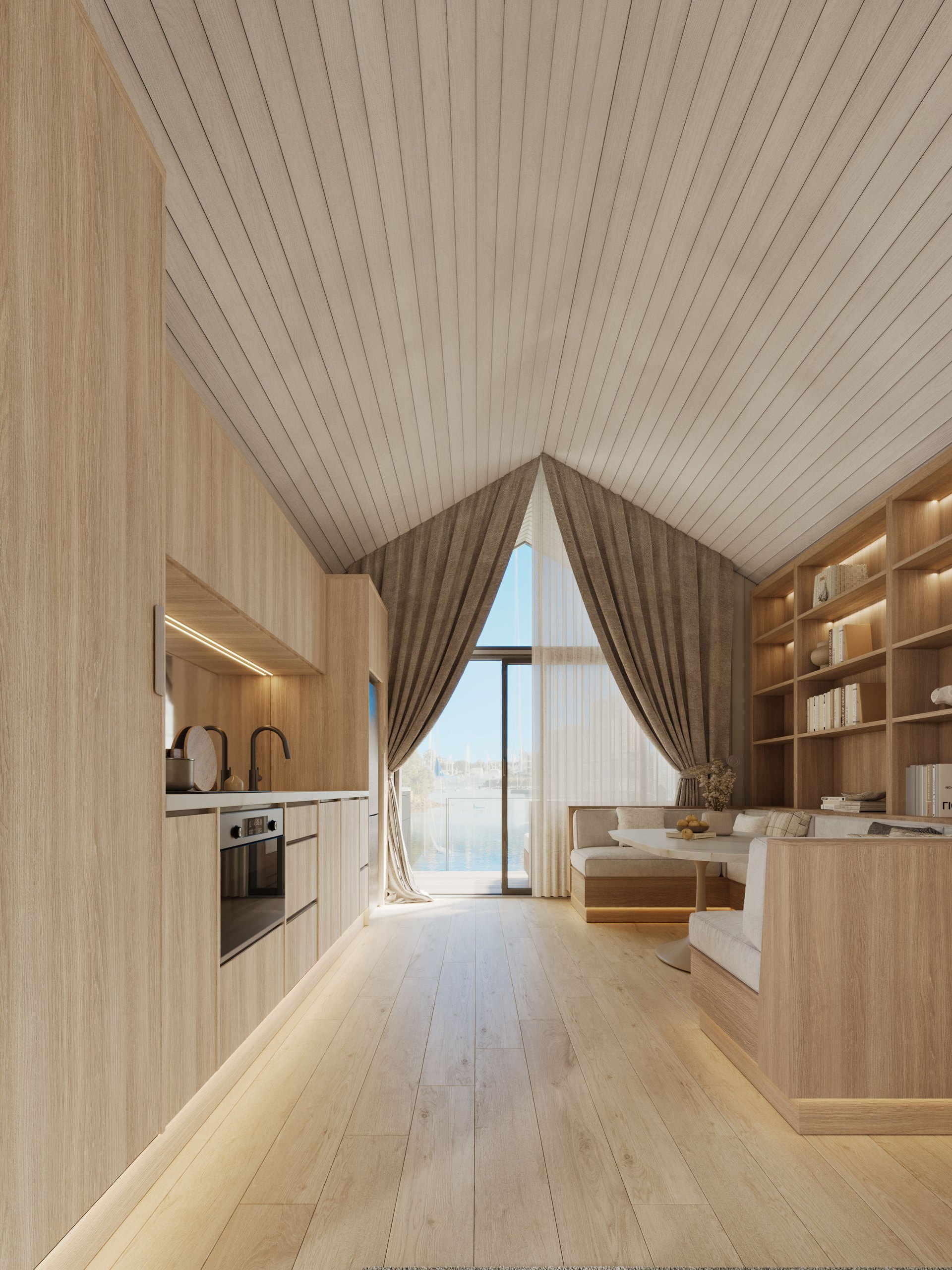
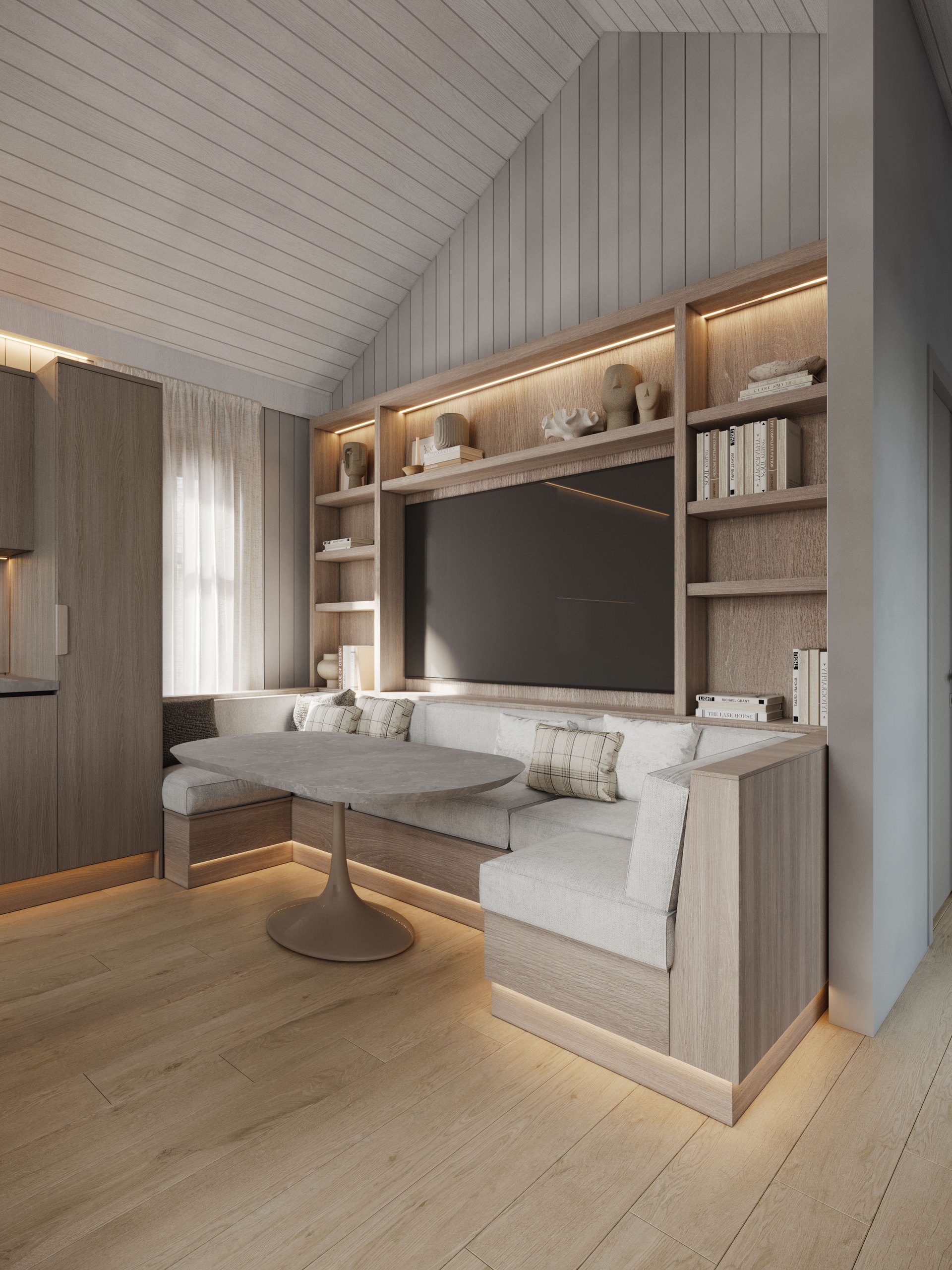
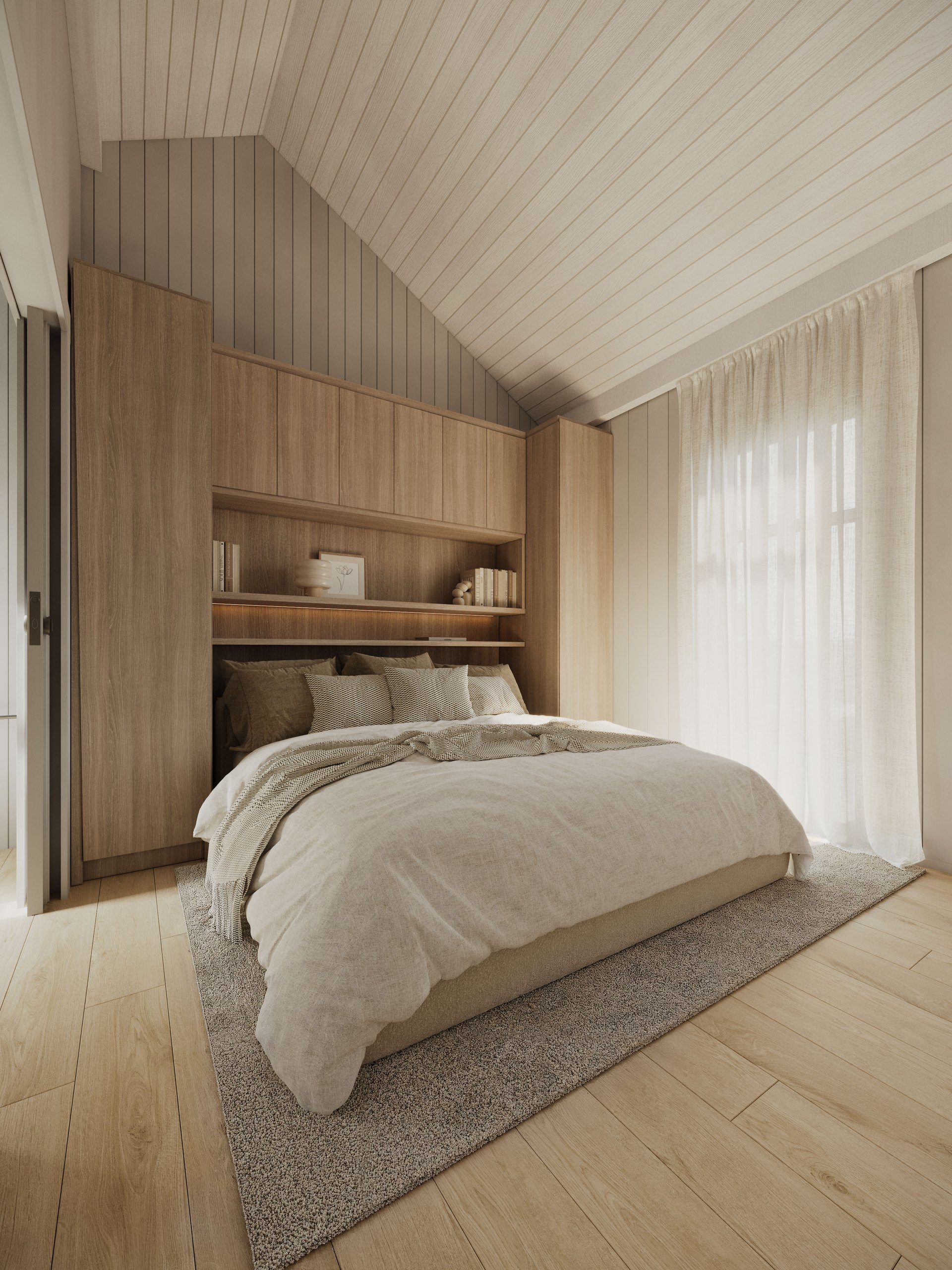
Inside, timber-lined walls and ceilings reinforce the boathouse character while light finishes and broad openings keep the rooms bright. The decks extend the living areas toward the marina, making the relationship between interior, water and surrounding boats central to the presentation.
How do the renders establish the marina setting?
The hero aerial gives an immediate answer to the most important location question: this is a home on the water, not a house beside it. The residence sits in its berth with Hobsonville Marina, boats, pontoons and the wider harbour visible around it. That wider view gives scale to the building and makes its unusual setting understandable before the viewer reaches the interior images.
Additional marina views move closer to water level. Looking from the left, right and front shows how the dark gabled form reads among the masts and how the deck connects to the pontoon. These angles also prevent the project from being understood through only one carefully chosen facade.
The context was treated as part of the architecture. Reflections, water movement, neighbouring boats, pontoons and marina buildings all contribute to a believable sense of place while keeping the residence itself as the focus.
How are the studio and two-bedroom homes differentiated?
The two residence types share the same architectural language, so the interiors have to make their different layouts clear.
The studio sequence uses open views through the compact plan. The kitchen, living and sleeping areas can be read together, with the deck and marina extending the apparent depth of the room. Close views of the kitchen, bathroom and bedroom then explain the joinery and finish detail without losing that connection to the water.
The two-bedroom residence is shown as a larger programme. Separate living and lounge views establish its shared spaces, while the main bedroom, guest bedroom, bathroom and study explain how the additional rooms fit within the gabled volume. The kitchen and deck images connect these spaces back to the same waterfront lifestyle shown in the studio.
Why include both day and evening images?
Daylight renders make the architecture, cladding and marina context easy to read. The evening views add a different layer: warm interior light becomes visible through the glazing, the dark exterior sits against the water, and the decks feel more sheltered and private.
Using both conditions is particularly useful for a waterside project because the experience changes markedly as the light drops. The day set explains form and location; the evening set communicates atmosphere. Both use the same materials and geometry, so they expand the visual story rather than presenting a different version of the design.
What does the Boathouse Residences film show?
The long-form film follows the smaller studio residence. It moves from the marina and exterior into the open-plan interior, then through the key spaces and onto the deck. Focusing the film on one home type keeps the sequence coherent while the complete still-image gallery covers both the studio and two-bedroom layouts.
Motion adds information that individual stills cannot: the transition from pontoon to residence, the compact flow between living functions and the relationship between the glazed interior and the water outside. The film and renders were developed from the same visual direction so they work together across a campaign.
A look at the Boathouse Residences renders
This selection moves from the marina context into both residence types and finishes with an evening view.
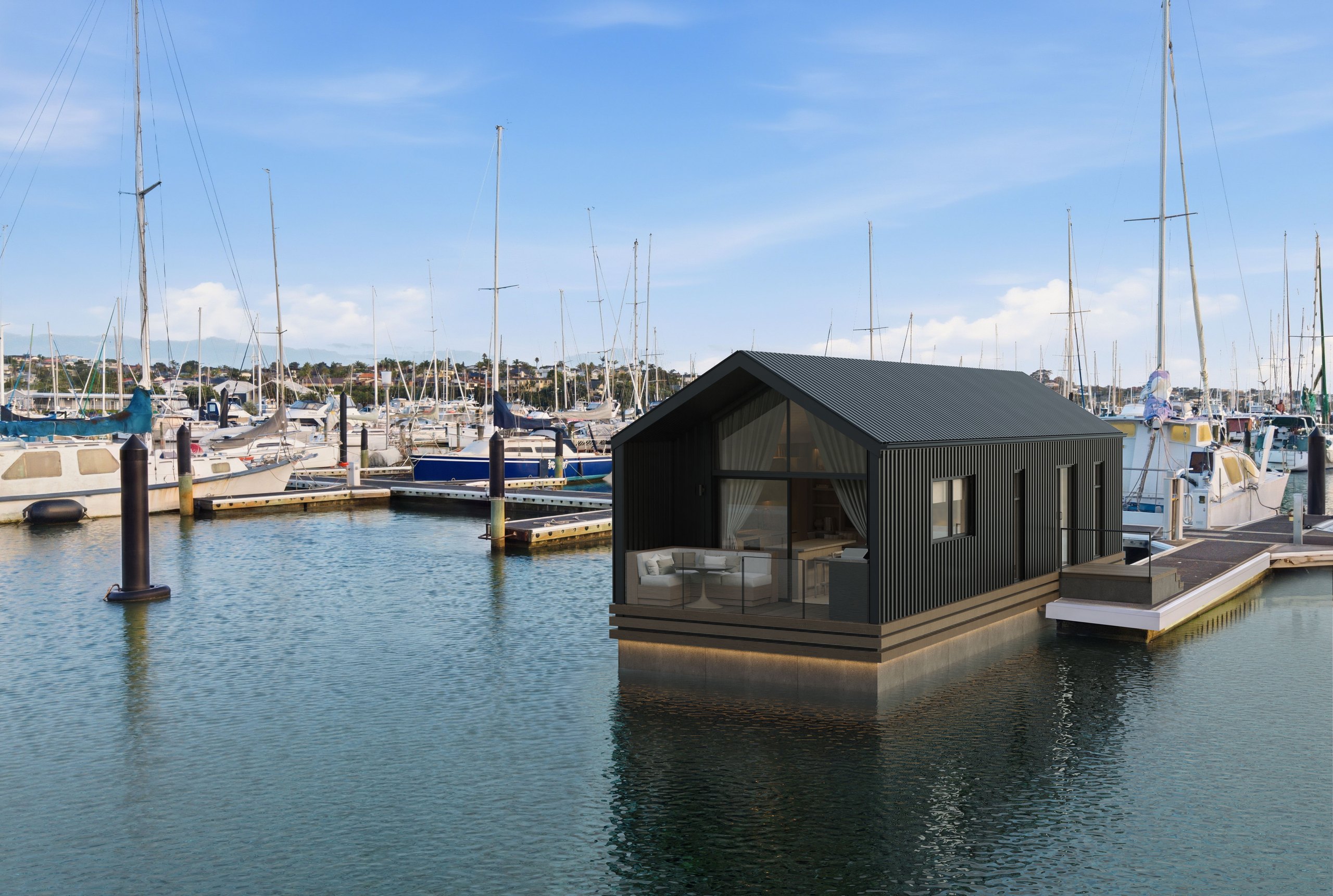
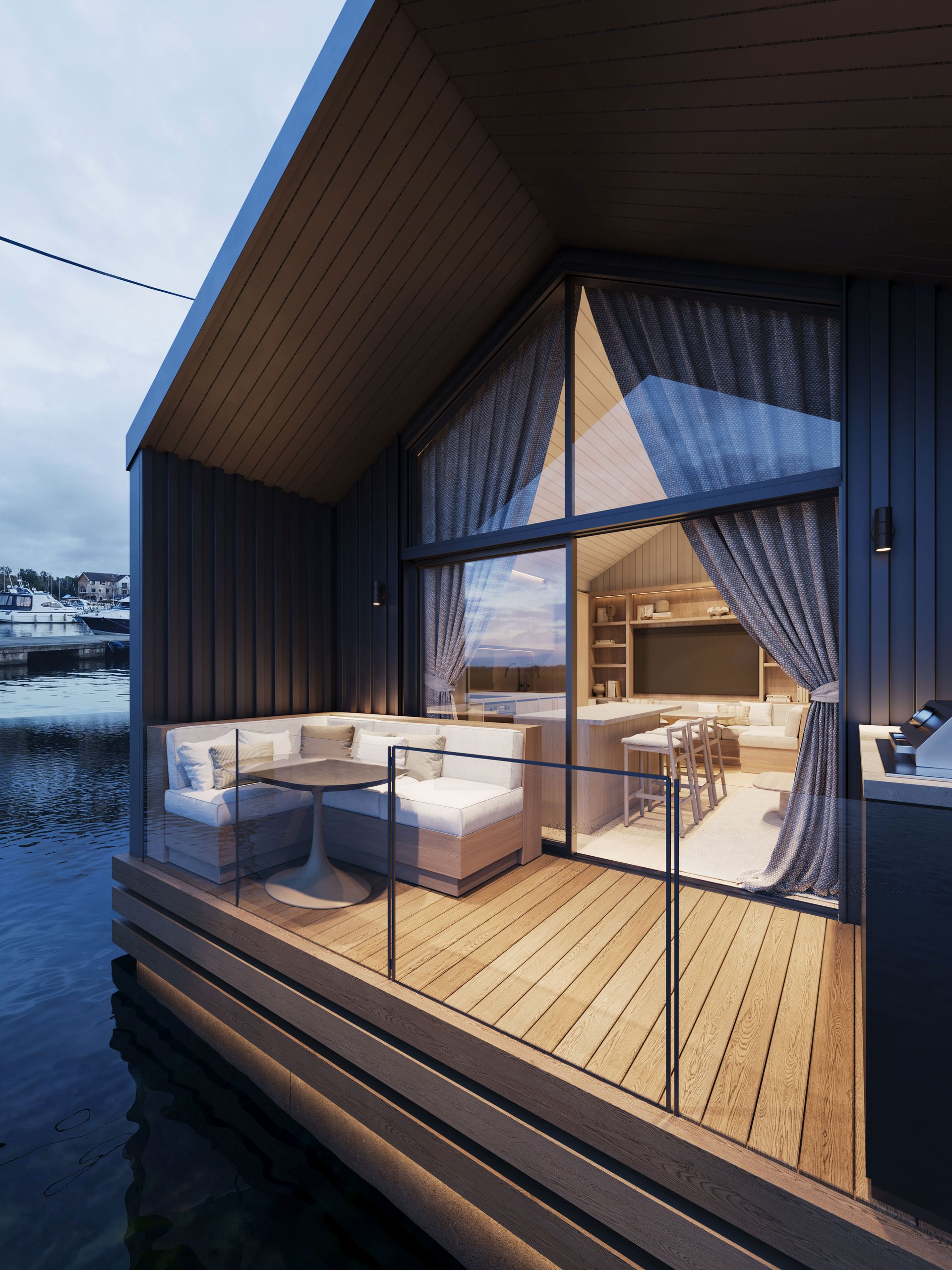
See all twenty-two renders and watch the studio film on the Boathouse Residences project page.
Frequently asked questions
What did Render Works create for Boathouse Residences?
Render Works created twenty-two photorealistic renders and one cinematic long-form film. The stills cover marina context, exterior day and evening views, studio interiors, two-bedroom interiors and decks.
Where are the Boathouse Residences?
Boathouse Residences are at Hobsonville Marina in Auckland, New Zealand. The renders place the floating homes within the working marina using aerial, water-level and deck views.
What types of homes are shown?
The visual set shows two types: a compact studio residence and a larger two-bedroom residence. Both use dark exterior cladding, a pitched roof, timber-lined interiors, full-height glazing and a deck facing the marina.
Which Boathouse Residence is featured in the film?
The cinematic film follows the studio residence. The full still-image set shows both the studio and the two-bedroom home.