Australian developers
Property development branding: what does a project actually need?
Last updated
A property development needs a clear name, a consistent visual identity and a set of images and messages that describe the homes being sold. The useful output is a working system for the website, brochure, listings and signage. Start with the architecture, location and intended buyers, then design the identity around those facts.
What should a development branding brief include?
A branding brief should explain what makes this particular development worth considering. Give the designer the site location, dwelling mix, architectural drawings, material direction and the practical features buyers will compare. A sheltered courtyard or a separate study is more useful information than an instruction to make the project feel premium.
Identify the likely buyer and the decision they need to make. A downsizer comparing apartments may care about storage, access and outdoor living. A family looking at a townhouse may need to understand bedrooms, parking and the relationship between the kitchen and garden. Treat these as briefing questions to test with the sales team, rather than assumptions about every buyer.
Also nominate one person to approve the identity. If the developer, sales agent and designer are all choosing different names and colours, the website and brochure can drift before the first image is placed.
Which brand assets are useful at launch?
Keep the identity small enough that everyone can use it consistently. A practical handover includes the approved files and examples of how they fit the actual marketing formats.
| Asset | What to agree before handover |
|---|---|
| Project name | Spelling, pronunciation and how the location appears alongside it |
| Logo | Light and dark versions, small-format use and editable artwork |
| Colour and type | Web and print colours, fonts and the licences needed to use them |
| Short project description | The location, home types and confirmed features in plain language |
| Image direction | Hero image, supporting views, crops and consistent treatments |
| Application examples | A website header, brochure cover and site sign using the same identity |
| Brand reference | A concise file explaining spacing, colours, typography and approved assets |
A name needs its own checks before it becomes signage or a domain. IP Australia's trade mark search tools are a useful starting point for investigating existing marks. Record the chosen name and who is responsible for the remaining checks in the brief.
Should the brand or the renders come first?
Develop the visual identity and renders together, using the same design information. The identity needs to suit the architecture; the render compositions need to leave room for the brochure title, website navigation or sign copy.
Choose a draft hero image early. Test the logo over both a light sky and a darker building facade. Check a narrow phone crop as well as a wide desktop image. This is where awkward combinations become visible, such as a long project name disappearing over detailed landscaping.
Keep the property colours accurate. A brand palette can influence the page background and typography, but it should not turn a specified brick or benchtop into a different finish.
How did the identity, renders and website work together at Horsham?
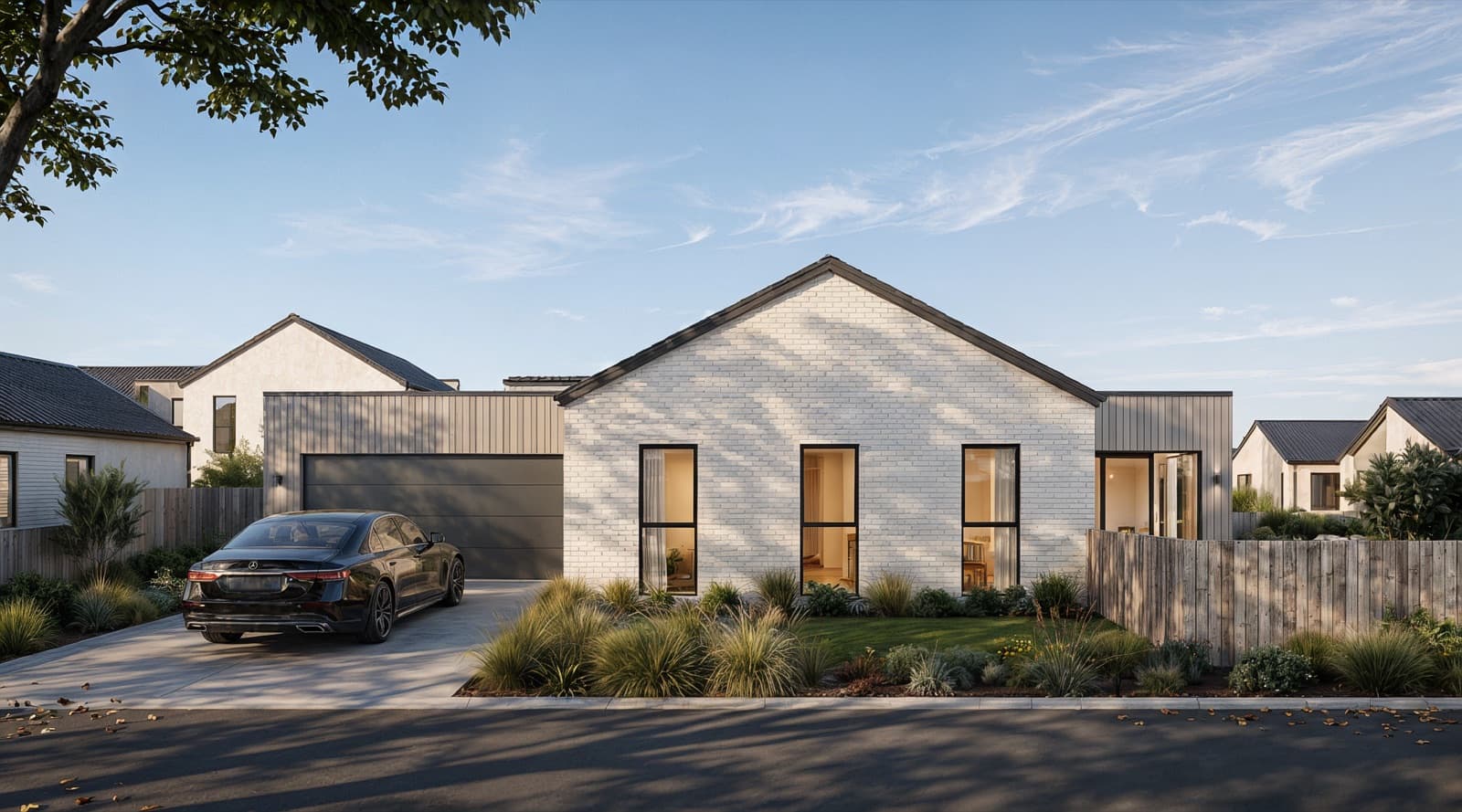
Render Works produced the renders, brand identity and bespoke website for The Horsham Residences, a Pragma Homes development in Rototuna North, Hamilton, New Zealand. The render imagery informed the visual direction and became the lead imagery on the website.

For an Australian development, the same coordination is useful: the buyer should recognise the project when moving from a listing to the website and then to a brochure. The location, architecture and actual home mix provide the content. The identity provides a consistent way to present it.
How do you keep the brand consistent after launch?
Give the sales team a single approved asset folder, with a clear distinction between working files and files ready to publish. Include the current logo, image set, project description and a contact for changes. Label superseded renders so they do not return in a later advertisement.
Before launch, compare the website, brochure and sign artwork side by side. Check the project name, address, home descriptions, finishes and enquiry contact. Our development marketing checklist covers the wider asset handover, while the property brochure checklist explains how to turn the identity into a useful sales document.
Frequently asked questions
Does a small townhouse development need its own brand?
A small development can use a restrained identity: a clear project name, consistent type and colours, strong imagery and a simple website or brochure. Match the scope to the campaign and the number of different places the project will appear.
Is a logo enough for a property development launch?
A logo is only one asset. The team also needs approved colours, typography, project copy, imagery and examples showing how those elements work together on the actual marketing material.
Can Render Works handle branding and renders together?
Yes. The Horsham Residences scope included renders, a brand identity and a bespoke website. Send the project brief and intended campaign channels so we can define the assets needed for your development.
Should every stage of a development have a new identity?
Use the main development identity consistently unless there is a clear reason to distinguish a stage. Stage names, image labels and availability information can make the differences clear without creating an entirely separate brand.

Bring the project identity and imagery together
Send the plans and your launch brief. We can discuss the renders, identity and website as one scope.
Discuss your project