Pricing
How Much Do Architectural Renders Cost in NZ? (2026 Guide)
In New Zealand in 2026, a single photorealistic architectural render usually costs between $500 and $2,500. A set of stills for a development runs from about $3,000 to $20,000, and a cinematic walkthrough video can reach around $20,000 with a traditional studio, though Render Works uses newer technology that brings that cost down a long way.
Those are starting points, not quotes, but they tell you whether your budget is in the right ballpark. Where you land comes down to what you need.
| Deliverable | Indicative price (NZ, 2026) |
|---|---|
| Single still render | $500 to $2,500 |
| Set of stills for a development | $3,000 to $20,000 |
| Cinematic walkthrough video | Up to about $20,000, less with our technology |
What are you actually paying for?
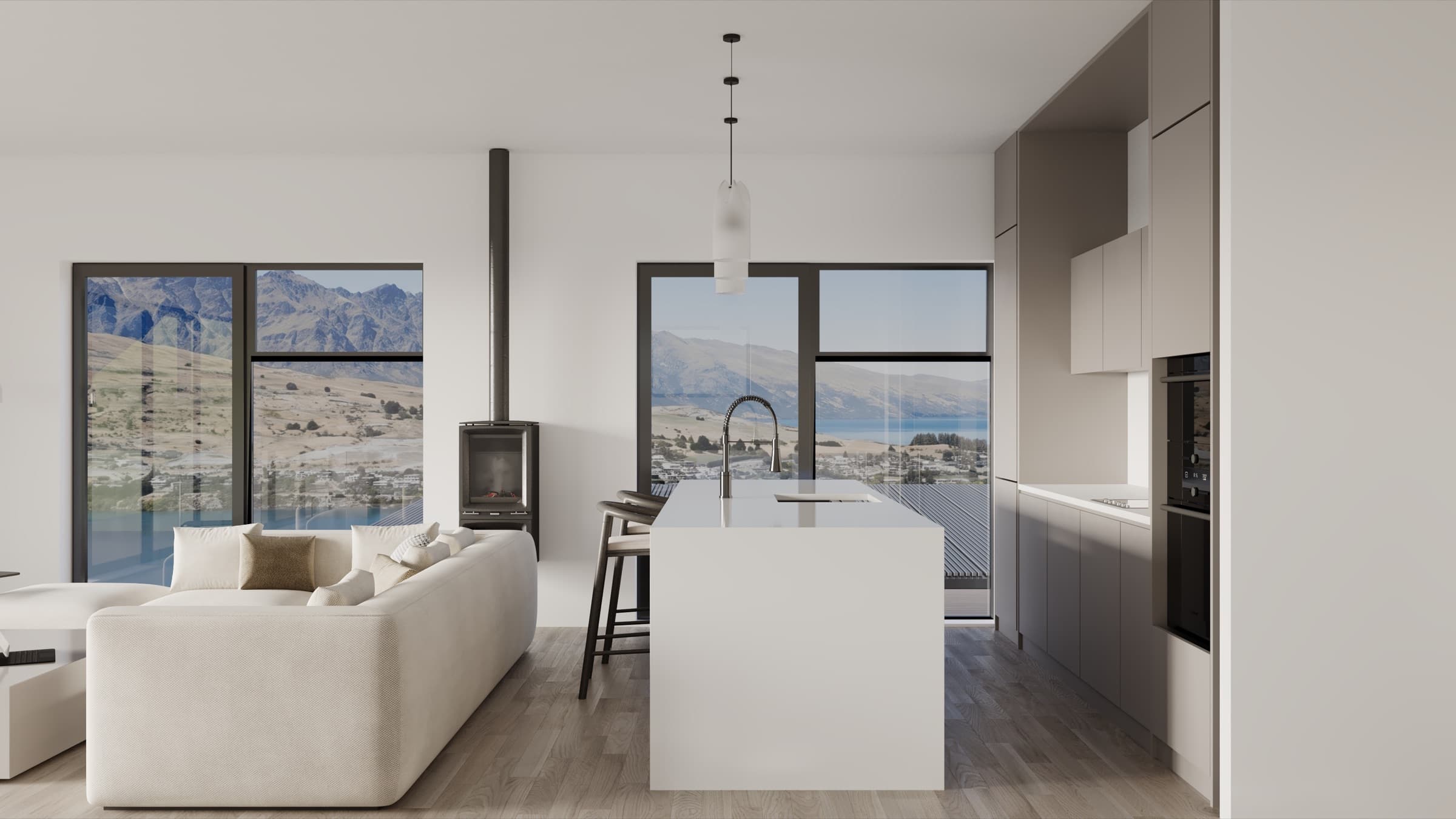
Architectural rendering is the craft of turning a building design into a believable image, and most of what you pay for is the labour behind it. The image is built from a 3D model of your building, then placed into a scene with lighting, materials, landscaping, and usually a few people and cars to give it life. Most of the cost is in the detail that makes it read as a real photograph rather than a computer model. An artist might spend a day getting the light to fall the way it would at golden hour, or matching a timber cladding to the exact product you have specified.
This is why two renders that look similar at a glance can be priced very differently. One might be a quick exterior with a stock sky. The other might be a styled interior where every cushion, plant, and reflection was placed by hand. You can read more about how the whole process works in our guide to architectural visualisation in NZ.
What makes a still render cost more?
For still renders, a handful of things decide where you land in the range:
- Exterior or interior. Exteriors usually cost more. They need landscaping, neighbouring buildings, and a full environment around the home, where an interior is a single contained space.
- How many images. Most studios drop the per-image price as the count goes up, because the model and scene are reused across views.
- Level of detail. A simple townhouse is quicker than a large mixed-use building with shopfronts, signage, and a busy street.
- Revisions. We include three rounds, which is the industry standard. Open-ended changes beyond that add hours and cost.
- Turnaround. A normal timeline is cheaper than a rush job that asks the team to clear a week for you.
Why does video cost more?
A walkthrough video is not one render. It is hundreds of them. Every second of footage is roughly 25 to 30 frames, and each frame has to be rendered, so even a short clip is a lot of computing and a lot of review. Add camera moves, animated people, changing light, and music, and you can see why video sits above stills. With a traditional pipeline a full cinematic walkthrough can reach around $20,000. We use newer technology that cuts that cost down, so video is more affordable than most people expect. The upside is that a good walkthrough holds attention far longer than an image, which is why it works so well for presentations and social campaigns. Our cinematic walkthrough service covers what goes into one.
How do you budget for a development package?
Most developers do not buy a single image. A common starting package is one hero exterior, a few interiors of the key room types, and a short video for the launch. Thinking in packages rather than single images usually gets you a better rate and a more consistent set of marketing assets.
If you want a sense of how we structure this, our 3D rendering service page walks through the options. Every project is a little different, so the most useful number is the one we give you after seeing your plans. Knowing what to provide up front makes that quote sharper — send us your plans for a tailored quote.
Is the higher price worth it?
It depends on what the renders are doing. If they are the main thing selling an unbuilt development, cheap imagery is a false economy. Buyers notice when a render looks flat or fake, and that doubt attaches itself to the project. Spending a bit more to get images that feel real tends to pay for itself in faster presales. If you only need a rough massing study for a council conversation, you do not need the full styled treatment, and you should not pay for it.

Want a real number for your project?
Send us your plans and a short brief. We will come back with a tailored quote and a recommended package.
Get a quoteFrequently asked questions
How much does a single architectural render cost in New Zealand?
As a rough guide in 2026, a single photorealistic still render usually runs between $500 and $2,500. Where you land depends on whether it is an exterior or interior (exteriors usually cost more), how much detail the scene needs, and how many images you order together.
Why do render prices vary so much?
Almost all of the cost is skilled labour. A small render with a simple scene takes far less time than a large building set into a full landscaped environment with custom detail and specific lighting. Turnaround matters too, since a tight deadline means more hours compressed into fewer days.
How long do architectural renders take?
Still image projects typically take about three weeks from approval. Cinematic walkthrough videos are usually delivered within about five business days once the renders are signed off, though complex animations take longer.
Are 3D renders worth it for off-the-plan sales?
For most developments, yes. Buyers commit before anything is built, so the renders are doing the selling. Good imagery helps people picture living there, which supports presales and can reduce the discount you need to offer early buyers.